















How Many Layers of Rubber Base Gel Do You Actually Need?

In brief
You need exactly two layers of rubber base gel for a perfect application: a paper-thin, uncured "slip layer" followed immediately by a thicker "building layer" to form the nail's apex. This specific two-step method ensures optimal strength, prevents the gel from flooding the cuticles, and guarantees a safe, complete curing process.
When applying rubber base gel, you need exactly two layers applied in a specific sequence: one ultra-thin, uncured slip layer, followed immediately by a thicker building layer to create the nail's apex. Applying multiple thick layers is a common DIY mistake that compromises both durability and safety.
According to industry standards and EU Regulation 2024/996 regarding cosmetic safety, proper application and curing are non-negotiable. A standard 48W UV/LED lamp requires exactly 60 seconds to fully cure a correctly proportioned layer of gel. Furthermore, ALL UV-curing gel products from The Gel Collection are 100% HEMA-free, di-HEMA-free, and TPO-free, as well as 21-free, ensuring the safest possible DIY experience at home (Signe Hartung Roslyng, *Negle*, 2024).
If you want to strengthen your natural nails without experiencing lifting, heat spikes, or thick, clumpy results, understanding the chemistry and technique behind rubber base gel is essential.
The Short Answer: How Many Layers Do You Need?
You do not need three, four, or five layers of rubber base gel. You need two functional layers applied in a single continuous process before curing.
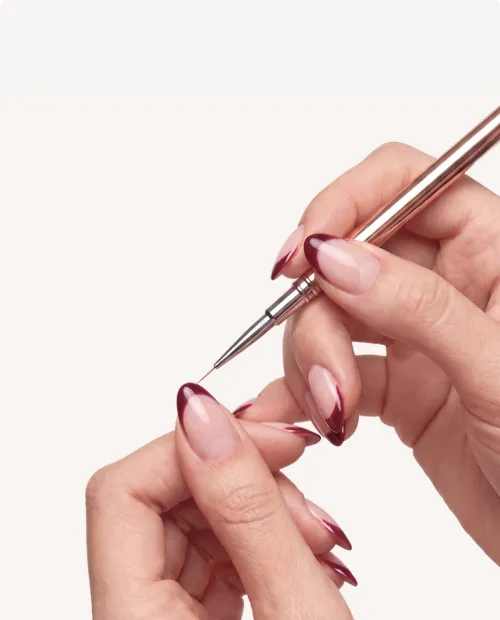
Instead of painting the gel on like traditional polish, rubber base requires a structural approach. The ideal method consists of:
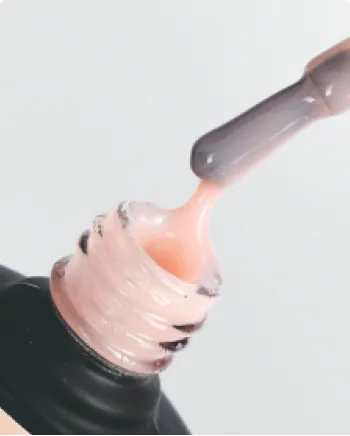
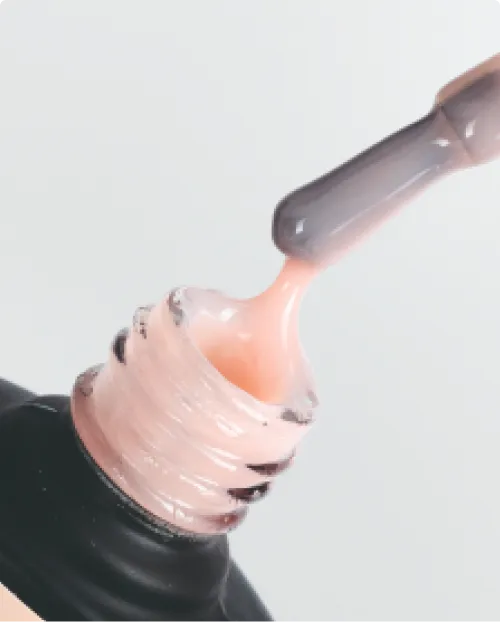
1. The Slip Layer: A slip layer is an uncured, paper-thin layer of gel applied to the entire nail plate that helps the subsequent thicker layer self-level and distribute evenly without flooding the lateral folds or cuticles. 2. The Building Layer: A thicker bead of gel placed near the cuticle and gently guided down over the wet slip layer to build the apex (the highest point of the nail) and provide structural strength.
Did you know?
The natural nail plate consists of 25 to 50 layers of dead keratin cells and is only 0.25 to 0.6 mm thick. It does not require oxygen, meaning you can safely wear and refill gel products continuously without "letting your nails breathe."
By using this two-layer technique, you ensure that the product is exactly 1 to 1.5 mm thick at the stress point, which is the optimal thickness for a 60-second cure under a 365/405 nm UV lamp. If you are just starting out, investing in a complete beginner gel nail kit ensures you have the correct viscosity gels and matching lamps to execute this technique flawlessly.
What is Rubber Base Gel? (And When to Use It)
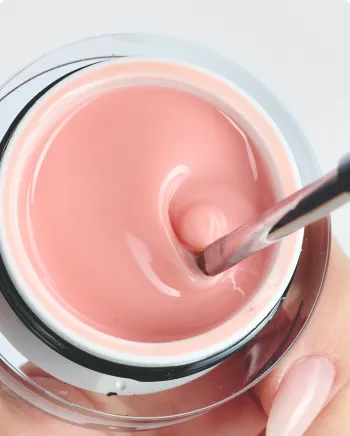
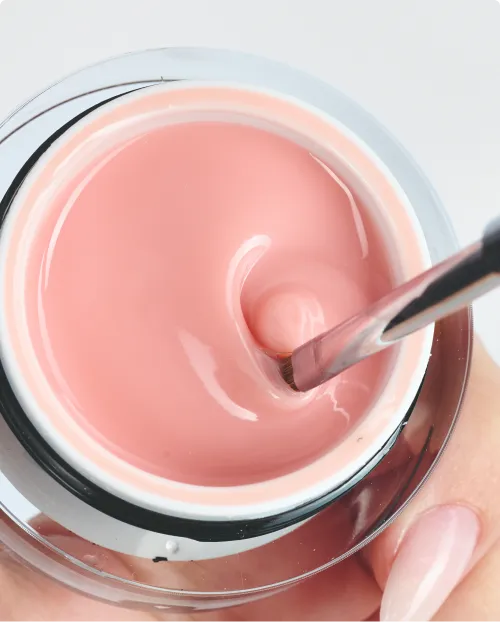
Rubber base is a flexible, thick but fluid UV-curing gel designed to reinforce natural nails, offering a durability of 4 to 6 weeks.
Unlike standard gel polish—which has a thin consistency and offers zero structural reinforcement—rubber base combines strength with high flexibility. It adapts to the natural movements of the nail plate without cracking or breaking. This makes it the absolute best choice for thin, fragile, or damaged natural nails of short to medium length.
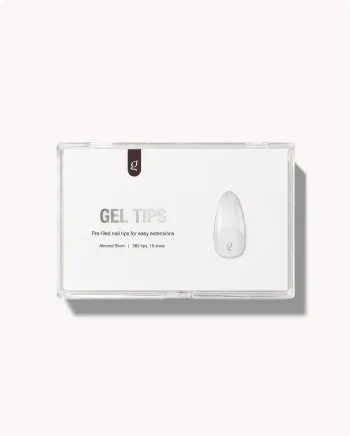
It is important to distinguish rubber base from other products: * Liquid Builder Gel (BIAB): Harder than rubber base. Ideal for repairing broken nails and very short extensions. * Builder Gel: A hard gel found in an open jar, used for building long nail extensions with forms or tips. * Gel Polish: A hybrid color product that provides up to 3 weeks of shine but no structural strength.
Rubber base is strictly for natural nail reinforcement. It is not strong enough to bear the weight of long extensions. Once your rubber base foundation is perfectly cured, you can proceed to mastering your gel polish application by adding your favorite color on top.

Step-by-Step: Perfect Rubber Base Gel Application
Proper preparation (prep) is the foundation of any gel manicure. Even the best rubber base will lift if the nail plate is not meticulously prepared.
Preparation and Mattifying
Push back the cuticles and remove all invisible cuticle tissue from the nail plate. Mattify the surface gently using a 100-grit buffer to create a microscopic grid for the gel to grip. Cleanse thoroughly with cleaner on a lint-free wipe. Apply a thin layer of Bonder and let it air dry for 60 seconds to temporarily dehydrate the nail plate.

Apply the Slip Layer
Apply a very thin, even layer of rubber base over the entire nail plate, keeping a microscopic distance from the skin. Do not cure this layer. This wet layer acts as a track for the next layer to follow.
Build the Apex
Pick up a small bead of rubber base on your brush. Place it near the cuticle area and gently guide it down the center of the nail, floating it over the wet slip layer. The gel is self-leveling. You can turn your finger upside down for a few seconds to let gravity pull the gel into a perfect apex at the stress point.
Seal the Free Edge and Cure
Run your brush horizontally across the very tip of the nail to seal the free edge. This prevents dirt from entering and stops lifting. Immediately cure the nail in your UV lamp for 60 seconds. If you experience heat spikes, use the 90-second low heat mode.
"Creating a proper apex with a slip layer is crucial for distributing weight. The apex must be placed exactly at the nail's stress point—the area where the nail naturally bends when pressure is applied to the tip. Without this architecture, the reinforcement will fail."
— Signe Hartung Roslyng, Negle (Gyldendal, 2024)
If you are a visual learner, we highly recommend watching a comprehensive video guide to gel nails to see the self-leveling process in action.
Watch our technical guide: Knowledge about the UV Curing Process
The Chemistry: Why Thick Layers Are Dangerous
A common misconception is that applying three or four thick layers of rubber base will make the nail stronger. In reality, it creates a severe chemical hazard.
Liquid gel consists of monomers, oligomers, and photoinitiators. When exposed to specific wavelengths of UV light (365 nm and 405 nm), the photoinitiators activate, causing the molecules to bind together into a solid plastic state. This is the curing process.
Undercuring occurs when UV light fails to penetrate thick layers of gel, leaving uncured monomers trapped against the nail plate, which significantly increases the risk of contact allergies. If the layer is too thick, the top surface cures and blocks the light from reaching the bottom.Important: Uncured gel molecules are small enough to penetrate the skin and enter the bloodstream, which is the primary cause of acrylate allergies. Always stick to the two-layer method (thin slip layer + controlled building layer) to guarantee a 100% full cure.
Because we prioritize your health, ALL products from The Gel Collection are strictly 100% HEMA-free, di-HEMA-free, and TPO-free. However, even with the safest 21-free chemistry, proper curing techniques are mandatory. If you struggle with product adhering to the skin, learn how to prevent gel lifting by keeping a 1 mm margin around the cuticles.
Maintenance: Refilling vs. Removal
Once your perfectly applied rubber base has grown out after 3 to 4 weeks, you face a choice: remove it completely or refill it.
Refilling is always the recommended approach. Full soak-off removals involving acetone and scraping can dehydrate and traumatize the natural nail if done too frequently. Because rubber base is a structural gel, you can simply file off 50% to 80% of the old product, remove any lifted areas, prep the new regrowth, and apply a new slip layer and building layer to restore the apex.
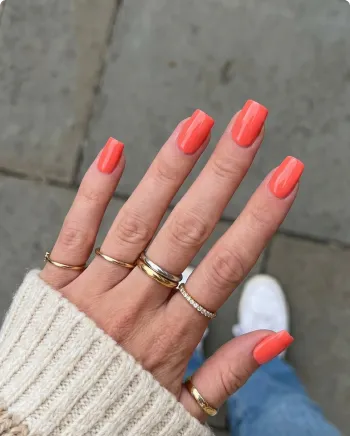
Once your refill is complete, you can finish with any color from our explore our gel polish color palette collection.


Frequently Asked Questions
Expert source
Signe Hartung Roslyng
Founder of TheGelCollection.com & author
Expert guidance in this article is based on knowledge from Negle (Gyldendal, 2024) by Signe Hartung Roslyng — the first Scandinavian reference book on professional gel nails.