















How Long to Cure Builder Gel Under a 48W Lamp

In brief
Builder gel requires exactly 60 seconds of full curing per layer under a 48W UV/LED lamp calibrated to 365/405 nm wavelengths. Wattage alone does not guarantee a proper cure; the lamp's light spectrum must perfectly match the gel's photoinitiators to ensure a solid structure, prevent lifting, and eliminate the risk of allergic reactions from uncured molecules.
When creating DIY gel extensions or reinforcing your natural nails at home, understanding the exact curing parameters is the most critical step for success. A common question among beginners and intermediate users alike is exactly how long to cure builder gel under a standard 48W lamp. The answer goes far beyond a simple timer—it involves specific chemical reactions, precise wavelengths, and strict safety protocols.
According to the authoritative guidelines in the book Negle by Signe Hartung Roslyng (Gyldendal, 2024), proper curing is the ultimate defense against contact allergies and structural failure. In fact, studies show that undercured gel is the leading cause of product lifting and skin sensitization in the DIY nail community. This comprehensive guide will explain the exact timeframes, the underlying chemistry, and the step-by-step process to achieve a flawless, safe cure every single time.
The Short Answer: Builder Gel Curing Time
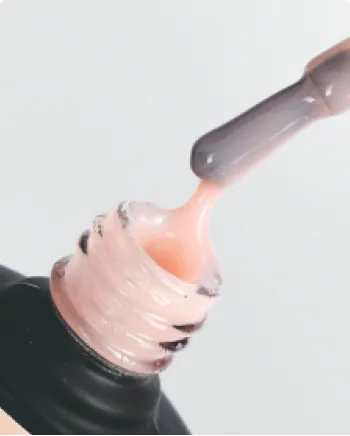
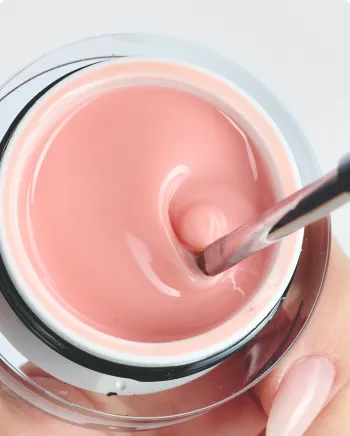
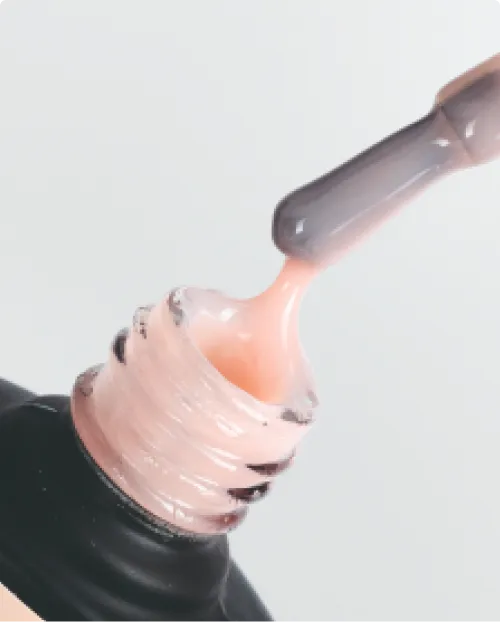
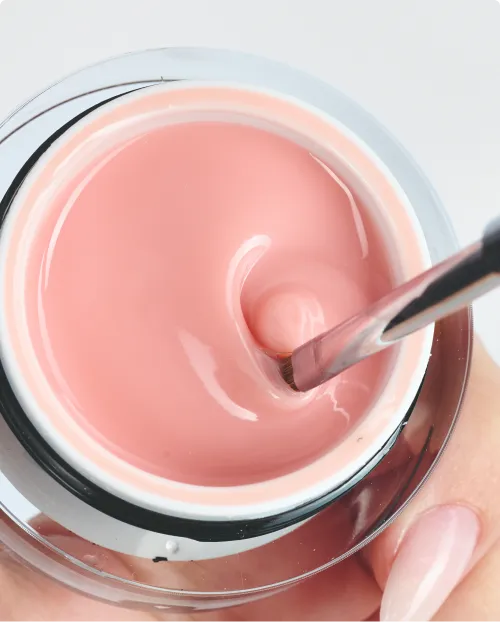
Builder gel is a thick, self-leveling hard gel used for strengthening the natural nail and building extensions from scratch. Because of its viscosity and the thickness of the layers applied, it requires a precise amount of UV energy to transition from a liquid to a solid state.
The definitive curing time for builder gel under a 48W UV/LED lamp is exactly 60 seconds for a full cure, and 10 seconds for a flash cure. However, this 60-second rule only applies if the lamp's diodes emit the correct dual wavelengths of 365 nm and 405 nm. If you are using a lamp with a lower wattage or incorrect wavelengths, the gel will remain in an uncured state beneath the surface, even if it feels hard to the touch.
Important: ALL products from The Gel Collection are 100% HEMA-free, di-HEMA-free, TPO-free, and 21-free. We never compromise on chemistry. When these clean formulas are cured correctly for 60 seconds, there is zero risk of uncured molecules penetrating the skin.
It is crucial to understand that gel products never "dry" in the air. They must undergo a chemical process called polymerization, which is solely activated by UV light. To ensure you have the right equipment for this process, you can upgrade to a professional machine setup that guarantees the correct output.
The Science of Curing: Why Wavelength Matters More Than Wattage
A widespread misconception in the DIY nail community is that a higher wattage automatically equals a better or faster cure. This is definitively false. Wattage simply measures the amount of electricity the lamp consumes, not the specific type of UV light it emits into the gel.
Liquid builder gel consists of three main chemical components: monomers, oligomers, and photoinitiators. When the gel is exposed to UV light, the photoinitiators absorb the light energy and trigger a chain reaction. This reaction causes the monomers and oligomers to bind together, forming a tight, solid molecular grid. This process is called polymerization.
For this reaction to occur, the UV light must hit the exact absorption spectrum of the photoinitiators. Most high-quality, EU-approved gels require wavelengths of 365 nm (which cures the surface) and 405 nm (which penetrates deep into the gel to cure the bottom layers). If you use a lamp that only emits 395 nm, your builder gel will suffer from severe undercuring, regardless of whether the lamp is 48W or 120W.
Did you know?
During the curing process, the liquid gel molecules bind together so tightly that they become too large to penetrate the human skin. This is why a fully cured gel product is completely safe to touch, whereas an uncured or liquid gel poses a risk of contact allergy.
To learn more about the technical specifications of your equipment, read our detailed guide on the safe use of UV lamps.
Step-by-Step: How to Cure Builder Gel Correctly
Applying and curing builder gel requires a methodical approach. Because builder gel is a self-leveling product applied from an open jar, it can easily flow into the lateral folds or the eponychium (cuticle area) if you work too slowly or apply too much product at once. Follow this precise method to ensure a perfect structure and a safe cure.
Create the Slip Layer
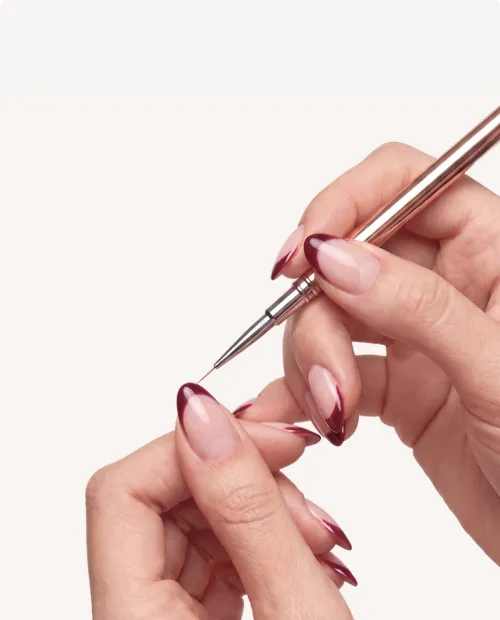
After thorough prep and applying your base coat, use your premium nail art brush to apply a microscopic, thin layer of builder gel over the entire nail plate. Do not cure this layer. This wet surface acts as a guide, helping the next, thicker bead of gel to self-level smoothly without running over the edges.

Build the Apex
Pick up a larger bead of builder gel and place it near the cuticle area. Gently guide the product down the center of the nail, allowing it to flow out towards the sides over your slip layer. The highest point of the gel (the apex) should be placed at the stress point of the nail to ensure maximum strength.

Flash Cure (10 Seconds)
Work on one finger at a time. Once the gel has self-leveled into the perfect shape, immediately place that single finger under the 48W lamp for exactly 10 seconds. This "flash cure" freezes the molecules in place, preventing the gel from flooding the cuticles while you work on the next finger.
Full Cure (60 Seconds)
Once all four fingers on one hand have been built and flash-cured, place the entire hand inside the lamp for a full 60 seconds. This ensures the UV light penetrates all the way through the thick apex down to the base coat, completing the polymerization process.
Remove the Sticky Layer
After the full cure, the surface will feel tacky. This is the sticky layer (oxygen inhibition layer), which is a completely normal byproduct of UV curing. Saturate a lint-free wipe with cleaner and firmly wipe the nail to reveal a hard, smooth surface ready for filing.
For a deeper visual understanding of this process, we highly recommend you watch our video guide on the UV curing process in our learning universe.
Heat Spikes: What to Do If the Gel Burns
When curing builder gel, you might occasionally experience a sudden, intense burning sensation on your nail bed. This is known as a "heat spike." It is important to understand that a heat spike is not a chemical burn or an allergic reaction; it is a physical manifestation of an exothermic reaction.
As the photoinitiators react to the UV light, the monomers and oligomers bind together at incredible speeds. This rapid molecular movement generates friction, which in turn generates heat. Because builder gel is applied in thicker layers than standard gel polish, there are more molecules moving at once, resulting in more noticeable heat.
"Never force yourself to endure a heat spike. If the gel burns, immediately remove your hand from the lamp. The heat is a sign of rapid polymerization, but it can damage the sensitive nail bed if ignored. Always utilize the Low Heat Mode for thick builder gel applications."
— Signe Hartung Roslyng, Negle (Gyldendal, 2024)
If you experience a heat spike, immediately pull your hand out of the lamp. Wait 5-10 seconds for the heat to dissipate, and then place your hand back in. To prevent this entirely, modern 48W lamps feature a Low Heat Mode (usually a 90-second button). This mode starts the lamp at a lower wattage and gradually increases the light intensity over 90 seconds, slowing down the chemical reaction and eliminating the sudden burst of heat.
The Dangers of Undercuring and Overcuring
Adhering strictly to the 60-second rule (or 90 seconds on Low Heat Mode) is non-negotiable. Deviating from these times leads to two distinct sets of problems, both of which will ruin your manicure and potentially harm your natural nails.
The Consequences of Undercuring
Undercuring occurs when the gel is exposed to UV light for too short a time, or if the lamp's diodes are degrading. An undercured builder gel might feel hard on top (due to surface curing) but remains soft and gooey underneath. This leads to:
- Severe Lifting: The product will detach from the natural nail plate within days, often creating a pocket lift in the center of the nail.
- Contact Allergies: Uncured gel contains free-floating acrylate monomers. If this soft gel comes into contact with the eponychium or lateral folds, it can trigger a severe immune response. Read more about the safe use of nail products to understand these risks.
- Structural Weakness: The apex will not be able to support the free edge, leading to painful breaks.
The Consequences of Overcuring
While less dangerous than undercuring, leaving your hand in the lamp for 3-4 minutes "just to be safe" is highly detrimental to the product's integrity. Overcuring causes the molecular grid to become too tight, resulting in:
- Brittle Nails: The builder gel loses its necessary flexibility and becomes prone to shattering or snapping upon impact.
- Discoloration: Clear or light-pink builder gels will develop an unsightly yellowish tint.
- Faded Colors: If you apply a gel polish color over your builder gel and overcure it, the pigments will burn and fade.
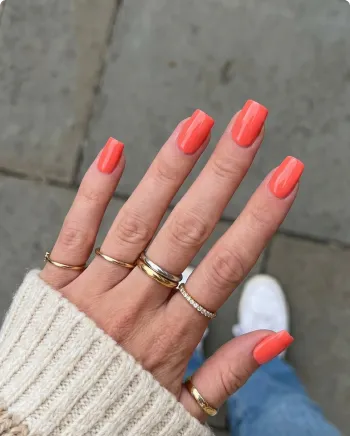
Once your builder gel is perfectly cured and filed into shape, you can proceed to apply your favorite gel polish colors. If you encounter issues during this phase, consult our guide on common gel nail polish problems.

When it is time to change your set, remember that builder gel cannot be completely dissolved with acetone like standard gel polish. You must follow correct removal procedures, which involves filing down 80-90% of the product before performing a refill. Forcing or prying the gel off will tear layers of keratin directly from your natural nail plate.
If you want to elevate your newly built extensions, explore our dimensional nail art options to add professional-grade designs easily at home.
Frequently Asked Questions
Expert source
Signe Hartung Roslyng
Founder of TheGelCollection.com & author
Expert guidance in this article is based on knowledge from Negle (Gyldendal, 2024) by Signe Hartung Roslyng — the first Scandinavian reference book on professional gel nails.