















Safe Use of UV Lamps for Gel Nail Polish: What You Need to Know 2026

In brief
Achieving beautiful DIY gel nails requires a fundamental understanding of safety, chemistry, and proper curing. By using a modern UV/LED lamp, respecting precise curing times, and exclusively using products that are 100% HEMA-free, di-HEMA-free, and TPO-free, you can safely enjoy long-lasting Gel Polish manicures at home without compromising your nail health.
The world of DIY nail treatments has evolved tremendously, bringing salon-quality results directly into our homes. However, with professional-grade products comes the need for professional-level knowledge. While many beginners search for terms like "gel neglelakk sikkerhet" (gel nail polish safety) when looking for guidance, it is crucial to establish the correct terminology right from the start: we are talking about Gel Polish, not traditional nail polish.
Gel Polish is a highly advanced hybrid between classic nail polish and gel. It provides vibrant color and a durable, high-gloss finish that can last up to three weeks. But unlike traditional polish that simply air-dries, Gel Polish requires a specific chemical reaction triggered by light. This is where the UV/LED lamp comes into play. Understanding how to use this lamp safely, how the chemistry of the gel interacts with the light, and why the ingredients in your products matter is the foundation of a safe and beautiful manicure.
At The Gel Collection, our priority is your safety. All our products are developed with the strictest chemical standards, ensuring that your DIY journey is as safe as it is creative. Let us dive into the science of curing, the truth about UV exposure, and how to master your home manicures safely.
Are UV Lamps for Nails Safe to Use?
One of the most common concerns among DIY nail enthusiasts is the safety of the lamps used to harden the gel. To understand this, we must look at the technology. Older generations of nail lamps relied solely on traditional UV bulbs, which required longer exposure times and emitted a broader spectrum of UV light. Today, the industry standard—and what you should always use—is the modern UV/LED lamp.
Modern UV/LED lamps emit a very targeted, narrow band of ultraviolet light (typically around 365-405 nanometers) specifically calibrated to activate the ingredients in Gel Polish, Builder Gel, and PolyGel. The exposure time is incredibly brief—usually between 30 to 60 seconds per layer. According to dermatological studies, the amount of UV exposure you receive during a standard gel manicure is minimal, often compared to spending just a few extra minutes in natural sunlight.
However, safety is not just about the light itself; it is about how the light interacts with the product. Using a high-quality lamp that distributes light evenly across the entire nail plate is essential to ensure that the gel cures completely all the way through.

Curing vs. Drying: Understanding the Chemistry Behind Gel Polish
A fundamental mistake many beginners make is thinking that Gel Polish "dries." It does not. Traditional nail polish dries through the evaporation of solvents. Gel products, on the other hand, undergo a chemical process called curing.
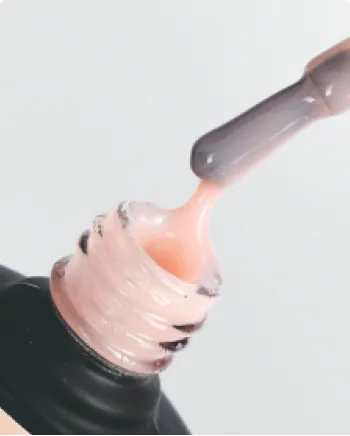
All UV-curing gel products—whether it is a thin Gel Polish, a flexible Rubber Base, or a hard Liquid Builder Gel • Champagne Shimmer • 21FREE—contain ingredients called acrylates and photoinitiators. In their liquid state inside the bottle, acrylates are active and have the potential to cause allergic reactions if they come into prolonged contact with the skin.
When you place your hand inside the UV/LED lamp, the light hits the photoinitiators. These act as little energy receptors that wake up and tell the acrylates to link together in a tight, solid chain. This rapid linking process transforms the liquid gel into a hard, durable, and completely safe plastic-like coating.
Did you know?
It is completely normal to experience a slight warming sensation on the nail plate while curing. This is called a "heat spike" and is simply the physical friction of the molecules rapidly linking together as the photoinitiators react to the UV/LED light.
The Dangers of Under-Curing and Over-Curing
Because curing is a precise chemical reaction, timing is everything. Guessing how long your nails should stay in the lamp can lead to two distinct problems: under-curing and over-curing.
The Risks of Under-Curing
Under-curing is by far the most dangerous mistake you can make in DIY gel manicures. If you remove your hand from the lamp too soon, or if you apply the gel in layers that are too thick for the light to penetrate, the surface may feel hard, but the gel underneath remains soft and liquid.
When gel is under-cured, the acrylates have not fully linked. This means the product is still chemically active. If this un-cured gel seeps onto your nail bed or micro-particles are filed away during removal and touch your skin, your risk of developing a contact allergy increases dramatically. Furthermore, under-cured gel will result in lifting, peeling, and a manicure that barely lasts a few days.
Important: Always apply your gel products in thin, even layers. The UV/LED light struggles to penetrate thick blobs of product, which will inevitably lead to under-curing at the base of the layer.
The Risks of Over-Curing
While not dangerous to your health, over-curing ruins the aesthetic and structural integrity of your manicure. Leaving your nails in the lamp for several minutes "just to be safe" can cause the photoinitiators to overreact. This results in faded colors, unwanted yellowing (especially on clear or white gels), and a product that becomes so brittle that it cracks and chips under normal daily stress.
Chemistry and Safety: Why We Are 100% HEMA-Free and TPO-Free
The safety of your manicure is not solely dependent on your lamp; it is heavily reliant on the chemistry inside the bottles you choose to use. The European cosmetics legislation strictly regulates what can be used in nail products, but at The Gel Collection, we go much further than the baseline requirements.
CRITICAL FACT: ALL products from The Gel Collection are 100% HEMA-free, di-HEMA-free, and TPO-free. They always have been, without exception. We also formulate our products to be 21-free, meaning they are formulated without 21 specific, potentially harmful chemicals commonly found in lower-quality cosmetics.
Why is this so important?
- HEMA and di-HEMA (di-HEMA-TMHDC): These are small-molecule acrylates known for providing excellent adhesion. However, because their molecules are so small, they can easily penetrate the skin and are recognized as some of the most frequent causes of contact allergies in the nail industry. By removing them entirely, we drastically reduce the allergy risk.
- TPO (Trimethylbenzoyl diphenylphosphine oxide): TPO is a highly effective photoinitiator used to make gels cure quickly under UV light. However, recent scientific evaluations have raised safety concerns regarding TPO, leading to its impending ban in the EU. We have proactively formulated ALL our products entirely without TPO, ensuring you are using the safest possible chemistry.
"Understanding the chemistry of your products is the first step toward a safe manicure. When we eliminate known allergens like HEMA and problematic photoinitiators like TPO, while ensuring correct curing, we transform a chemical process into a safe, creative art form."
— Signe Hartung Roslyng, Negle (Gyldendal, 2024)

5 Tips for Safe Nail Treatments with a UV/LED Lamp at Home
To ensure that your DIY manicures remain a safe and enjoyable experience, follow these five essential rules every time you sit down to do your nails.
1. Always use a compatible, modern UV/LED lamp
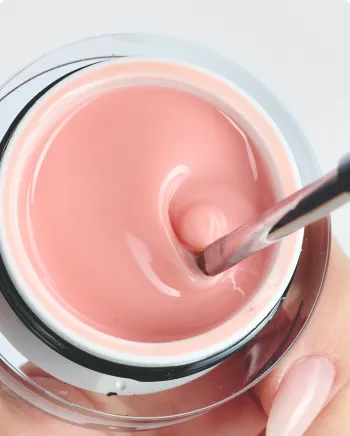
Do not use old, outdated UV lamps. Ensure your lamp has enough wattage and the correct wavelength to cure modern gels. If you are building extensions with products like PolyGel • Nude Transparent • 21FREE or PolyGel • Milky Pink • 21FREE, a high-quality lamp is non-negotiable for a solid cure.
2. Utilize the "Low Heat Mode"
If you have thin, fragile, or damaged nails, the rapid chemical reaction during curing can cause a painful heat spike. Most modern lamps feature a "Low heat mode" which gradually increases the UV light intensity. This slows down the linking of the molecules, resulting in a gentle, pain-free cure.
3. Keep the gel strictly on the nail plate
Before you place your hand in the lamp, inspect your nails. Have you flooded the cuticle (eponychium) or the lateral folds (the skin along the sides of the nail)? Liquid gel on living skin is the primary cause of contact allergies. Always clean up any mistakes with a wooden stick or a brush dipped in cleanser before curing. Once cured on the skin, it can cause irritation and premature lifting.
4. Respect the exact curing times
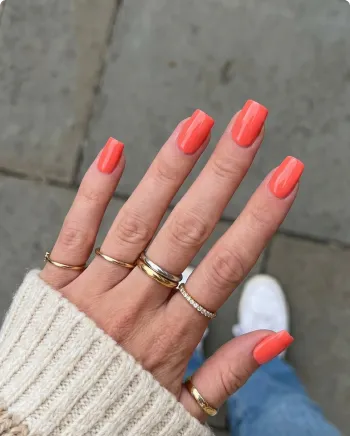
Do not guess. If your Base Coat requires 60 seconds, cure it for exactly 60 seconds. If your Gel Polish • 800 Peony Pop • 21FREE needs 60 seconds, do not leave it in for three minutes. Precision is key to avoiding both under-curing and over-curing.
5. Master your Prep (Without Over-Prepping)
Proper preparation (prep) is vital for the gel to adhere, meaning it won't lift and trap moisture (which can lead to bacterial infections). Prep involves gently pushing back the cuticles, removing dead skin cells, and lightly matting the nail plate to create a surface grid. However, avoid over-prepping. Filing too hard thins the natural nail plate, making it sensitive to heat spikes and weakening the foundation of your manicure. Using high-quality tools, like the PACKAGE DEAL • Micro Mandrel Bit + Micro Sanding Bands, helps you prep safely and precisely.


By understanding the anatomy of your nails, the chemistry of your products, and the technology of your lamp, you take full control of your DIY nail journey. Whether you are creating intricate art with a Blooming Gel Kit or maintaining your setup with a Filter til Dust Collector • The Gel Collection and a Refill for Travel Kit • The Gel Collection, safety should always come first.
Frequently Asked Questions
Expert source
Signe Hartung Roslyng
Founder of TheGelCollection.com & author
Expert guidance in this article is based on knowledge from Negle (Gyldendal, 2024) by Signe Hartung Roslyng — the first Scandinavian reference book on professional gel nails.