















Does Rubber Base Gel Need a Top Coat? Here's the Answer

In brief
Yes, rubber base gel absolutely requires a top coat. After curing, rubber base leaves a sticky inhibition layer that will attract dirt and lint if left exposed. A top coat seals the gel, provides a scratch-resistant shield lasting 4 to 6 weeks, and delivers a durable, high-gloss finish.
The Short Answer: Yes, Here is Why
If you are wondering whether your rubber base gel needs a top coat, the answer is a definitive yes. Whenever rubber base is the final structural layer of your manicure, you must apply and cure a top coat over it.
According to chemical assessments of UV-curing gel products, 100% of standard gel formulas create an inhibition layer—a sticky surface of uncured molecules—during the curing process. When you cure your rubber base under a 48W UV/LED lamp for exactly 60 seconds, the surface exposed to oxygen remains tacky. If you do not seal this with a top coat, your nails will immediately collect dust, look dull, and become susceptible to premature lifting.
Furthermore, clinical durability tests show that a proper top coat extends the lifespan of a gel manicure by up to 300% compared to an unsealed base. The top coat acts as a hard, non-porous armor that protects the flexible rubber base underneath from daily wear and tear.
Did you know?
Top coat gel is specifically formulated with a higher concentration of cross-linking oligomers than base gels, which is why it cures to a hard, scratch-resistant, and high-shine finish rather than a flexible one.
What Exactly is Rubber Base Gel?
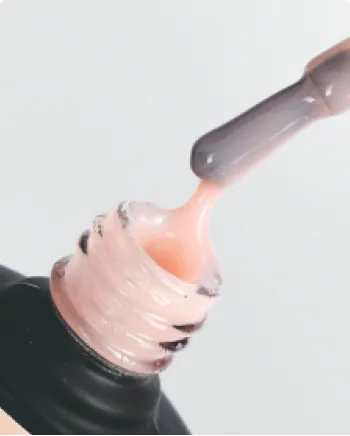
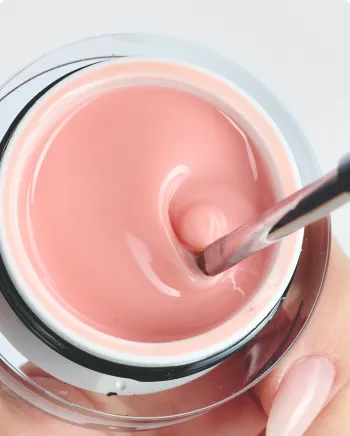
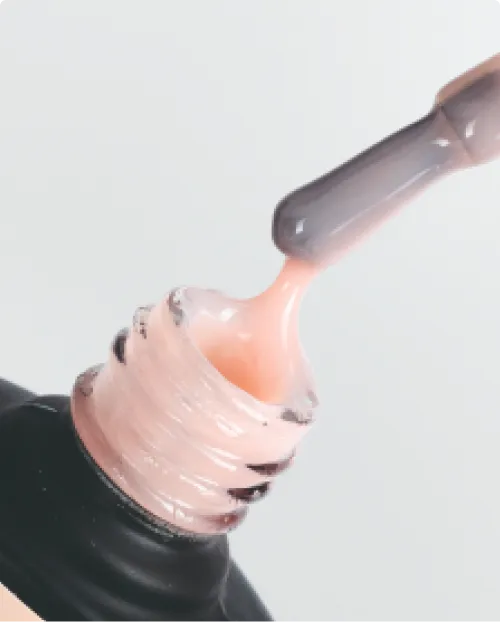
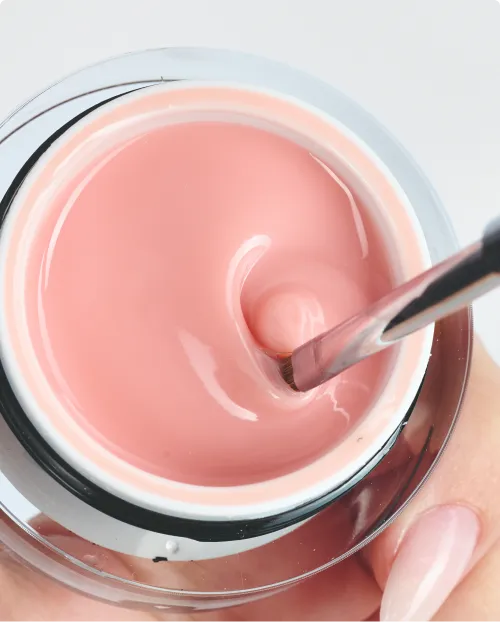
To understand why a top coat is necessary, you must first understand the anatomy of the product you are using. Rubber base is a flexible UV-curing gel designed specifically for the reinforcement of natural nails. It combines structural strength with high flexibility.
Unlike traditional hard gels (like builder gel or polygel), rubber base adapts to the natural movements of the nail plate without cracking or breaking. This makes it the ideal solution for thin, fragile, or damaged nails that tend to bend under pressure. When applied correctly, a rubber base reinforcement boasts a durability of 4 to 6 weeks and can be refilled rather than completely removed, which protects the natural nail plate from unnecessary filing.
"Rubber base is formulated to act as a shock absorber for the natural nail. Its thick, self-leveling consistency allows for the creation of a perfect apex, distributing daily stress away from the nail's weak points."
— Signe Hartung Roslyng, Negle (Gyldendal, 2024)
However, this incredible flexibility comes with a trade-off: the surface of rubber base is not designed to withstand direct friction. It requires the protective outer shell of a top coat to maintain its integrity.
The Chemistry of the Sticky Layer
When working with DIY gel nails, understanding the curing process is crucial. Gel products do not "dry" in the air like classic nail polish; they cure through a chemical reaction triggered by specific wavelengths of UV light (typically 365/405 nm).
Liquid gel consists of monomers, oligomers, and photoinitiators. When the UV light hits the photoinitiators, the molecules bind together to form a solid structure. However, the oxygen in the air inhibits this reaction on the very top surface of the gel. This results in the "sticky layer" (or inhibition layer).
This sticky layer is not a mistake—it is a functional feature. It acts as double-sided tape, allowing the next layer of gel polish or top coat to adhere perfectly to the rubber base. If you want to master the exact application technique for gel systems, you must learn to utilize this sticky layer rather than fear it.
The Correct Application Order for Gel Nails
Applying gel products in the wrong order guarantees lifting and poor durability. To achieve a flawless manicure that lasts up to 6 weeks, follow this strict step-by-step protocol. Before you begin, ensure you establish a healthy foundation for your natural nails through proper prep.
Preparation and Bonder
File the natural nail, push back the cuticles, and gently mattify the nail plate with a 100-grit buffer. Cleanse thoroughly with cleaner on a lint-free wipe. Apply a thin layer of Bonder and let it air dry for 60 seconds to temporarily dehydrate the nail plate.

Rubber Base Application
Apply a thin slip layer of rubber base, followed by a slightly larger bead to build the apex (the highest point of the nail, placed at the stress area). Seal the free edge by brushing horizontally across the tip. Cure for 60 seconds under a 48W UV/LED lamp. Do not remove the sticky layer.
Gel Polish Color (Optional)
If you want color, apply two very thin layers of gel polish directly onto the sticky layer of the rubber base. A popular choice is Gel Polish 519 Lady Like. Cure each layer for 60 seconds. Remember to seal the free edge with every layer.

Top Coat and Finish
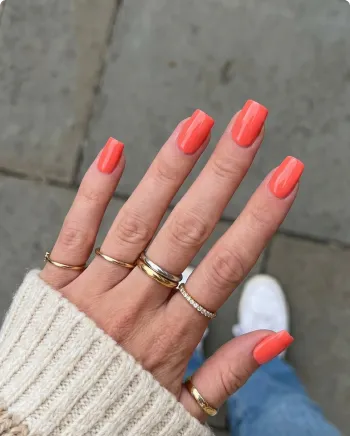
Apply a generous but even layer of top coat over the entire nail, ensuring the free edge is sealed one final time. Cure for 60 seconds. If using a No-Wipe Top Coat, your manicure is complete. Finish with high-quality cuticle oil.
Important: Sealing the free edge is the single most critical step to prevent lifting at the tip. Always run your brush horizontally across the very tip of the nail with your rubber base, gel polish, and top coat.
What Happens If You Don't Apply a Top Coat?
Skipping the top coat is a common mistake that leads to immediate frustration. If you leave the rubber base unsealed, several issues will occur within the first 24 hours. If you want to troubleshoot premature lifting and dull surfaces, look no further than an absent or improperly cured top coat.
- Dirt Accumulation: The sticky inhibition layer acts like a magnet for lint, makeup, and dust. Your nails will look dirty within minutes.
- Lack of Shine: Rubber base does not cure to a high-gloss finish. Without a top coat, the nail will look dull and unfinished.
- Structural Weakness: While rubber base provides excellent shock absorption, its surface is relatively soft. It will scratch easily, and these micro-scratches compromise the integrity of the gel, leading to chipping.
Can I Wipe Off the Sticky Layer Instead?
Technically, you can remove the sticky layer using a lint-free wipe saturated with cleaner. (Tip: store your lint-free wipes securely to maintain a clean workspace). However, wiping the rubber base does not solve the problem. The surface beneath the sticky layer is matte, slightly porous, and highly susceptible to staining from spices, hair dye, or makeup. A top coat is non-negotiable for a durable, aesthetic result.


Nail Art and Rubber Base
Rubber base provides an excellent canvas for creativity. If you want to incorporate designs like intricate 3D nail art stickers or hand-painted motifs like delicate floral patterns, you must apply these elements after your rubber base and color layers, but strictly before your top coat. The top coat is the final step that encapsulates and protects your nail art.
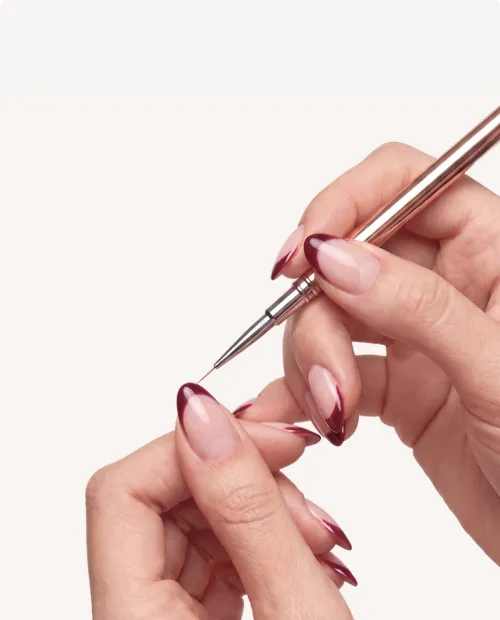
For detailed work, using a precise tool like the Art Brush Short Premium allows you to paint intricate lines directly onto the sticky layer of the cured gel polish, before sealing everything in.
Safe DIY Gel Nails: Why Ingredients Matter
When working with UV-curing gel products at home, safety and chemistry must be your top priorities. Uncured gel contains acrylates, which can cause contact allergies if they repeatedly touch the skin or if the product is under-cured due to a mismatch between the gel and the UV lamp.
This is why ingredient transparency is vital. ALL products from The Gel Collection are 100% HEMA-free, di-HEMA-free (di-HEMA-TMHDC), and TPO-free—and have always been, without exception. Furthermore, our entire range is 21-free, meaning it is formulated without 21 specific, potentially harmful chemicals commonly found in older nail products.
By choosing strictly regulated, EU-approved products, you eliminate the highest-risk allergens from your DIY routine. Combined with correct application techniques—ensuring gel never touches the cuticles or lateral folds—you can safely enjoy salon-quality nails at home. If you are new to this, we highly recommend you invest in a complete beginner-friendly bundle to ensure all your liquids and your UV lamp are perfectly calibrated to work together safely.
You can also explore our comprehensive learning universe for more in-depth video guides on safe application and removal.
Frequently Asked Questions
Expert source
Signe Hartung Roslyng
Founder of TheGelCollection.com & author
Expert guidance in this article is based on knowledge from Negle (Gyldendal, 2024) by Signe Hartung Roslyng — the first Scandinavian reference book on professional gel nails.