















Builder Gel Extension Application: Timing, Curing & Filing Guide

In brief
Creating durable builder gel extensions requires meticulous nail preparation, precise apex building for structural integrity, and correct UV curing. By mastering the slip layer technique and the 8-zone filing method, you can achieve salon-quality, safe, and long-lasting gel nail extensions at home.
Mastering builder gel extension application is the ultimate milestone for any DIY gel nail enthusiast. To create extensions that do not lift, break, or cause damage to the natural nail plate, you must follow a precise, scientifically backed protocol. A correct application involves a 100-grit buffer for preparation, building a structural apex at the nail's stress point, and exactly 60 seconds of full curing under a 48W UV/LED lamp emitting 365/405 nm wavelengths.
According to the authoritative guidelines in the book Negle (Gyldendal, 2024), the longevity of gel nails is 80% dependent on preparation and 20% on application technique. Furthermore, safety is paramount. In compliance with strict EU cosmetic regulations, it is crucial to understand that ALL products from The Gel Collection are 100% HEMA-free, di-HEMA-free (di-HEMA-TMHDC), TPO-free, and 21-free—and have always been, without exception. This eliminates the most common allergens found in traditional nail products, ensuring a safe environment for your DIY manicures.
What is Builder Gel?
Did you know?
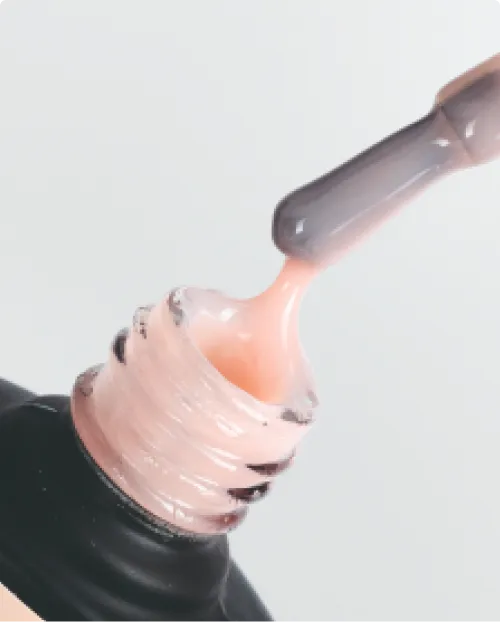
Builder gel is a hard, self-leveling, UV-curing gel used to create nail extensions from scratch and reinforce natural nails, providing a durability of 3 to 4 weeks before requiring a fill.
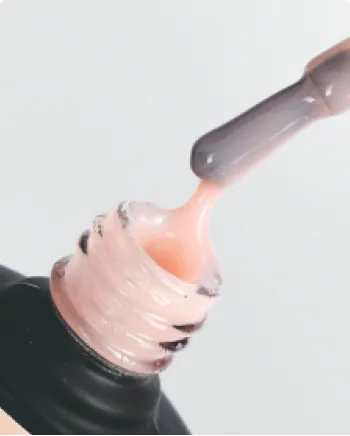
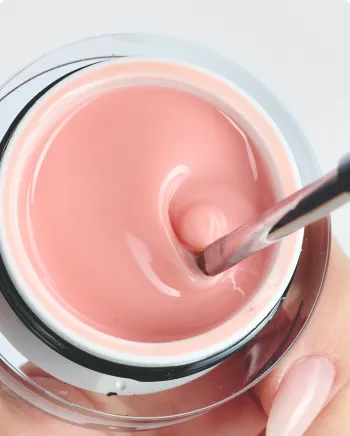
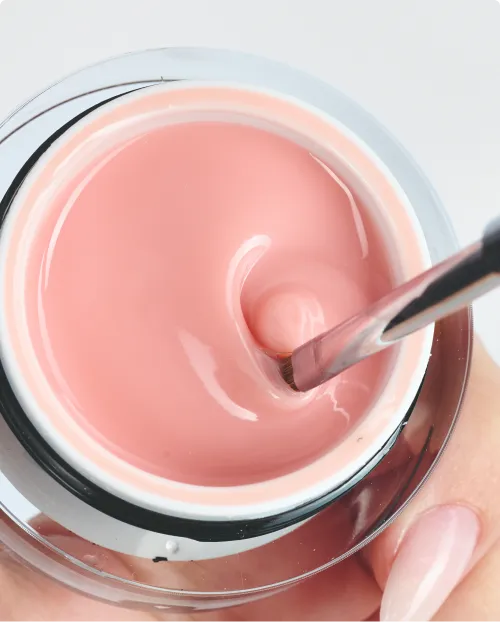
Unlike standard gel polish, which only provides color and up to 3 weeks of shine without adding structural strength, builder gel is a hard gel designed for heavy-duty reinforcement and limitless length extension. It is housed in an open pot and must be applied using a separate gel brush. The consistency is thick yet fluid, meaning it possesses self-leveling properties. It will naturally smooth itself out over the nail plate, but it will also flow into the cuticles if you do not work efficiently.
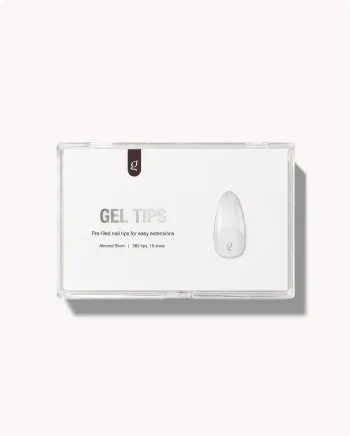
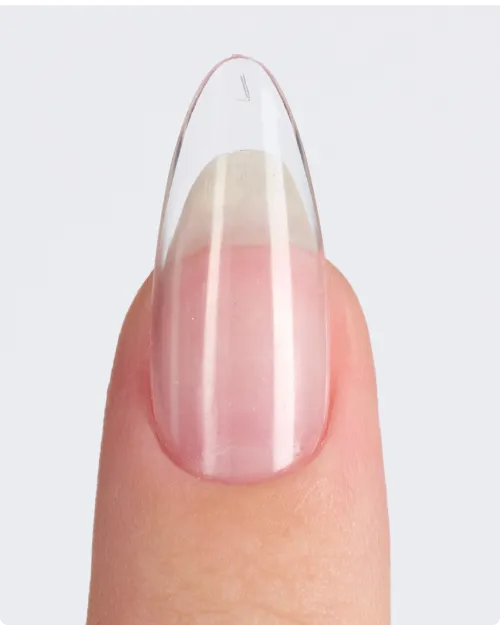
Builder gel can be used in conjunction with classic plastic tips, paper or foil forms, or dual forms. Because it cures into a rigid, hard structure, it is the optimal choice for extending the natural nail. If you are looking to start your extension journey, you can explore our complete range of hard building gels to find the perfect shade for your skin tone.


Step 1: Essential Prep for Gel Nail Extensions
Preparation (prep) is the absolute foundation of any successful gel nail extension. If your gel lifts at the cuticles or the free edge, 99% of the time, the error occurred during the prep phase. The natural nail plate consists of 25-50 layers of dead keratin cells and is approximately 0.25-0.6 mm thick. Your goal is to create a microscopic surface grid that the gel can grip, without thinning the nail.
Follow these definitive steps for perfect prep:
- Shape the natural nail: File your desired length and shape using a 220/240-grit file.
- Remove all cuticles: Push back the eponychium (cuticle) with a pusher and trim the dead tissue. You must remove both the visible and the invisible cuticle (the thin membrane of dead cells stuck to the nail plate).
- Mattify the surface: Gently buff the nail plate with a 100-grit buffer. You are only removing the natural shine to create a rough grid. Never use a coarse file on the natural nail, as over-filing leads to thin, soft nails and poor product adhesion.
- Cleanse thoroughly: Saturate a lint-free wipe with cleaner and scrub the nail plate, focusing on the lateral folds (sides) and under the free edge to remove all filing dust and natural oils.
- Apply Bonder/Primer: Apply a very thin layer of primer to briefly dehydrate the nail plate. Let it air dry for 60 seconds.
Important: Once the prep is complete and the nail is cleansed, you must NEVER touch the nail plate with your fingers. Even the smallest amount of natural skin oil transferred to the nail will cause the builder gel to lift.

Step 2: Builder Gel Extension Application Techniques
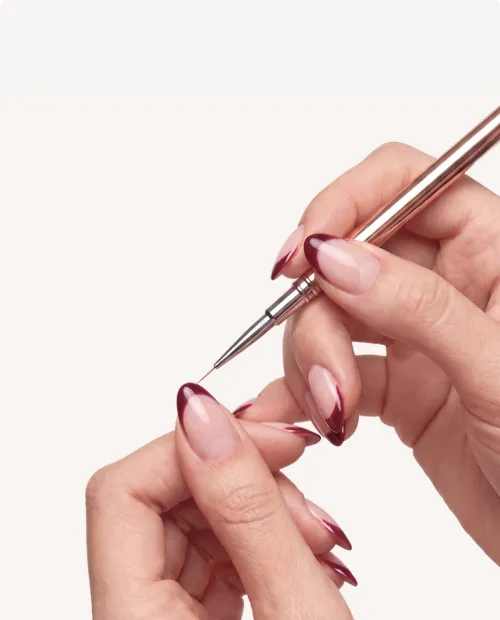
When applying builder gel, you are acting as an architect. The goal is to build a structure that can withstand daily impact without snapping. This requires mastering the apex, the C-curve, and the slip layer technique. For visual learners, we highly recommend watching our detailed guide on extending with forms.
"The apex is the highest point of the nail extension and must be placed directly over the stress point—the exact area where the nail would naturally bend and break under pressure. Without a properly placed apex, any extension longer than a few millimeters will inevitably snap."
— Signe Hartung Roslyng, Negle (Gyldendal, 2024)
The Slip Layer and Apex Building
To achieve a smooth, self-leveled surface, you must utilize a slip layer. This is a very thin layer of uncured builder gel applied over the entire nail plate and extension form. Once the slip layer is down, you place a larger bead of gel near the cuticle and gently guide it down the nail. The wet slip layer acts as a lubricated track, pulling the larger bead evenly across the surface.
To build the perfect apex, use gravity to your advantage. Once you have guided the gel into place, turn your finger upside down for 5-10 seconds. The self-leveling gel will pool slightly in the center, naturally forming the upper arch and apex. Once you are satisfied with the shape, immediately flash cure the nail in your UV lamp to freeze the gel in place.
Always remember to seal the free edge. Run your brush horizontally across the very tip of the extension during every single layer. This encapsulates the edge and prevents dirt and moisture from penetrating the layers, which is a primary cause of tip lifting.
Step 3: The Science of Curing (Timing and Safety)
A common misconception in the DIY nail community is that gel "dries." Gel products do not dry; they cure through a chemical reaction. The liquid gel contains monomers, oligomers, and photoinitiators. When exposed to specific wavelengths of UV light (365/405 nm), the photoinitiators activate, causing the molecules to bind together into a solid, durable plastic matrix.
Flash Curing vs. Full Curing
A flash cure is a brief 10-second exposure to the UV lamp used between individual fingers. This freezes the self-leveling gel so it doesn't flow into the cuticles while you work on the next finger. A full cure takes 60 seconds and must be done on the entire hand at the end of the application.
During the curing process, you may experience a heat spike. This is a normal exothermic reaction caused by the molecules rapidly binding together. If it becomes uncomfortable, remove your hand and utilize your lamp's "Low Heat Mode," which gradually increases the UV intensity over 90 seconds to mitigate the heat.
Undercuring vs. Overcuring: Undercuring is highly dangerous. If the gel is not fully cured, free-floating unreacted molecules remain on the nail. These can penetrate the skin and cause severe contact allergies. Always ensure your lamp matches your gel system. Conversely, overcuring (leaving the nails in the lamp for several minutes) will result in brittle nails that are prone to shattering and may cause clear builder gels to yellow.
After the final cure, the nail will have a "sticky layer" (inhibition layer). This is simply uncured gel that was exposed to oxygen during the curing process. You must wipe this off thoroughly with a lint-free wipe saturated in cleaner before you begin filing.
Step 4: The 8-Zone Filing Technique for Perfect Shape
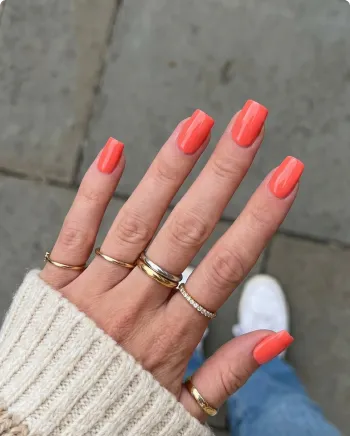
Even with perfect self-leveling technique, builder gel extensions require refinement with a hand file or an e-file to achieve a crisp, professional look. The book Negle outlines a strict 8-zone filing technique to ensure symmetry and structural integrity. Always use a 180-grit file for shaping hard builder gel.
- Zone 1: Lower Arches. Look at the nail from the side. The underside of the extension must run perfectly horizontal to the natural nail. It must not point upwards or droop downwards.
- Zone 2: The Free Edge. Hold the file at a slight angle and file the tip to your desired shape (square, almond, etc.), ensuring the edge is thin and crisp, not bulky.
- Zones 3 & 4: Sides and Hips. File the lateral sides parallel to each other. Be incredibly careful not to over-file the "weak points" where the natural nail meets the extension.
- Zone 5: Transition to Natural Nail. Using circular motions, thin out the gel near the cuticle area so it sits flush with the natural nail. File only on the gel, never on the natural nail plate.
- Zone 6: The Tip. File from side to side in a smooth arc to ensure the surface of the free edge is even.
- Zone 7: The Apex. File minimally here. Only use sweeping motions around the apex to blend it into the rest of the nail. Never file the top of the apex flat, as this destroys the structural strength.
- Zone 8: Buffing. Finally, use a foam buffer in circular motions over the entire nail to remove deep scratches before applying your gel polish colors or top coat.
Nail Care and Maintenance After Extensions
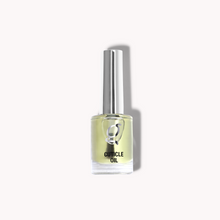
Once your beautiful extensions are complete, proper nail care is non-negotiable. The natural nail plate relies on keratin, which contains natural oils and moisture. When you apply a hard gel product, you block the nail's ability to receive moisture from the top down. To compensate, you must apply a high-quality, fragrance-free nail oil to the cuticles and under the free edge at least twice daily.
Important: Never soak off or completely remove builder gel extensions unless absolutely necessary. Repeated removal with acetone severely dehydrates the nail plate. Instead, you should perform a "fill" (opfyldning) every 3 to 4 weeks.
To perform a fill, you file away 50-80% of the old product, completely flattening the old apex. You then prep the newly grown-out natural nail at the cuticle, apply bonder, and build a new apex using fresh builder gel. This method protects the underlying natural nail from constant filing and chemical exposure, ensuring your nails remain strong and healthy beneath the gel. If you want to see this process in action, watch our step-by-step guide on gel reinforcement.
Frequently Asked Questions
Expert source
Signe Hartung Roslyng
Founder of TheGelCollection.com & author
Expert guidance in this article is based on knowledge from Negle (Gyldendal, 2024) by Signe Hartung Roslyng — the first Scandinavian reference book on professional gel nails.